Case Study
Elevating rainforest conservation with the stature of a premier scientific institution
Dedicated for thirty years to land acquisition and the strict protection of the world's last tropical primary rainforests, the Winston Canopy Foundation was burdened with an outdated portal where administrative reports overshadowed ground reality.
We thoroughly redesigned its visual and editorial architecture to unite scientific rigor, immersion into core sanctuaries, and philanthropic transparency for major benefactors and international supporters alike.
01 · Documentary immersion
Conveying the dizzying heights of the high canopy
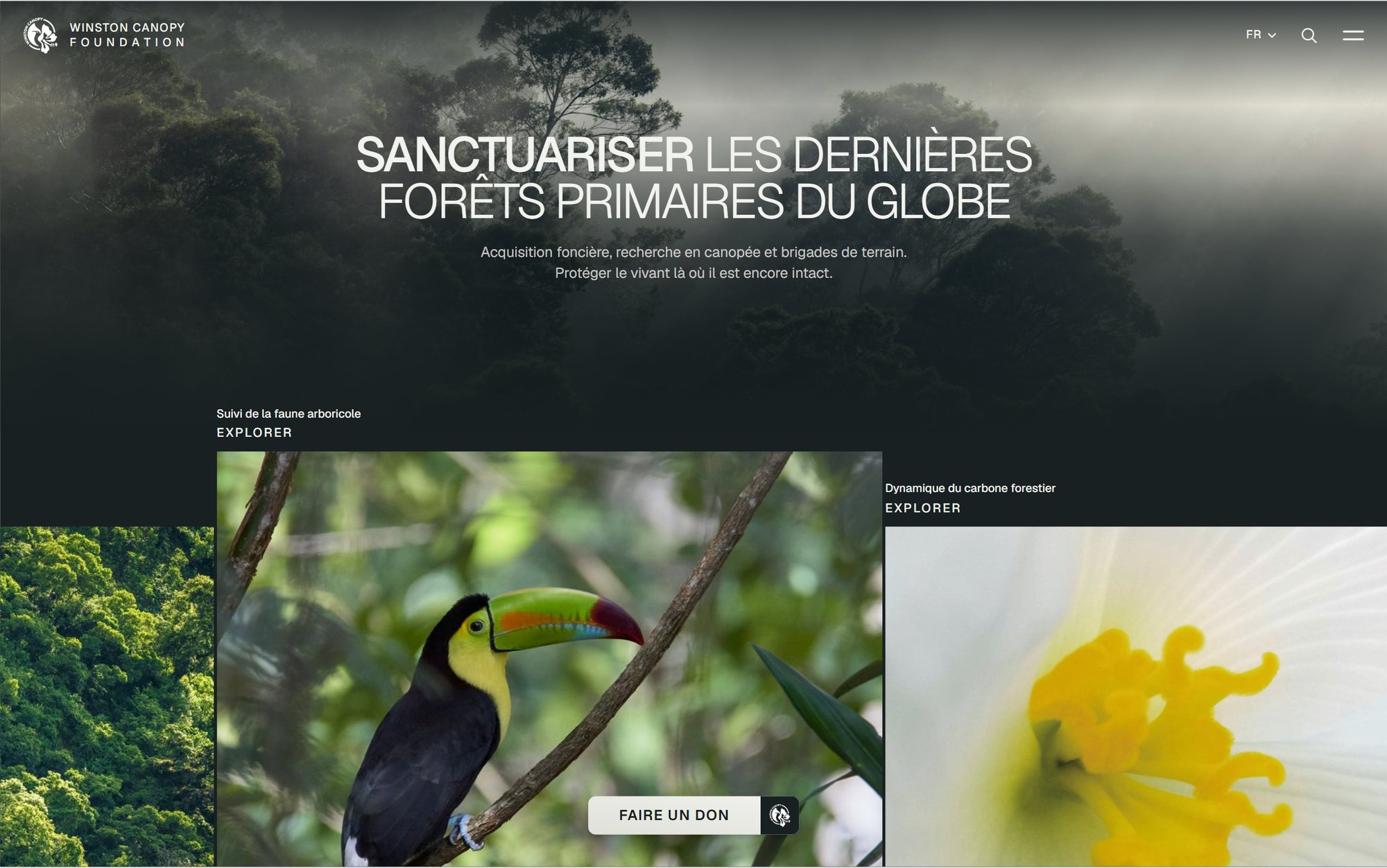
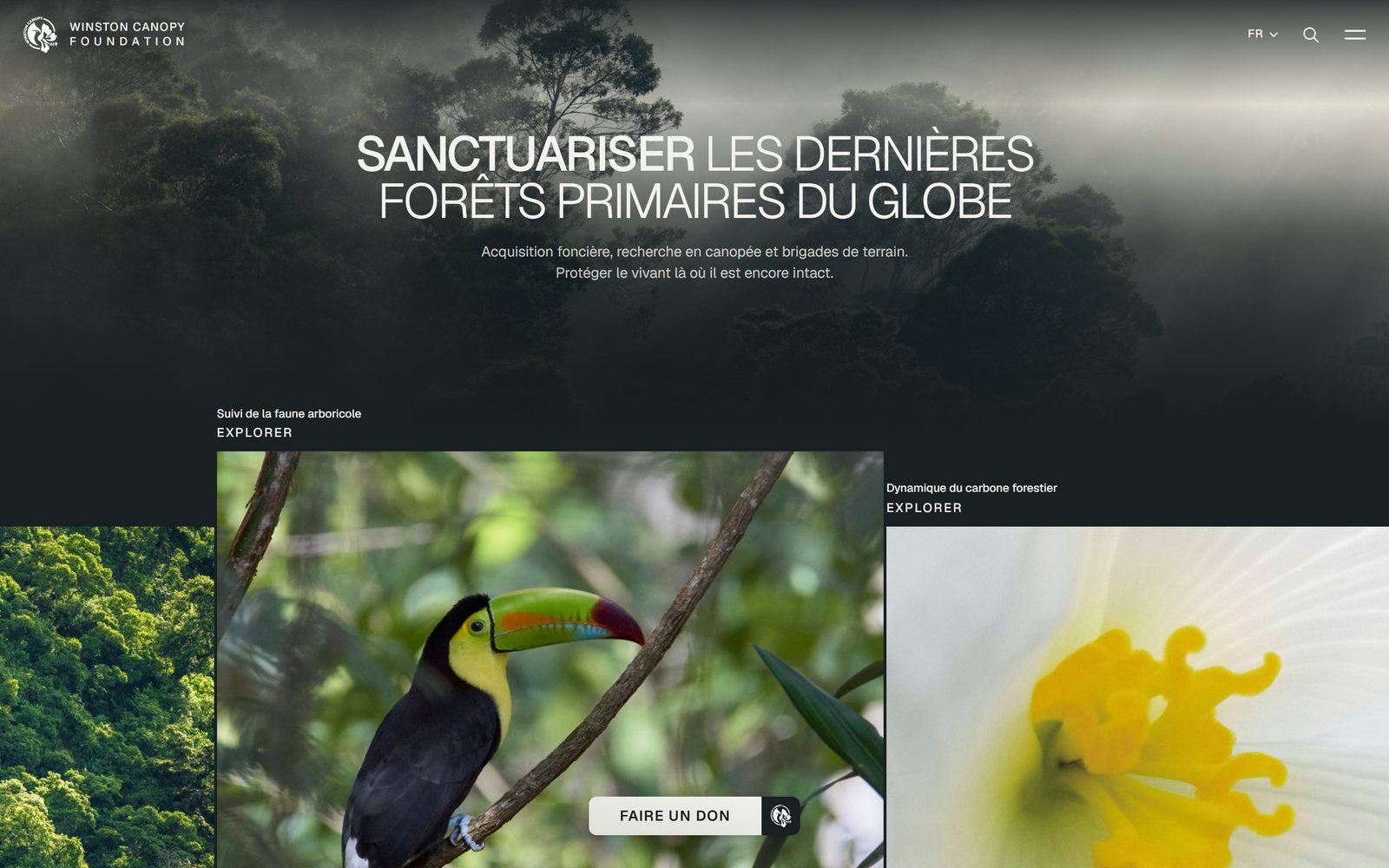
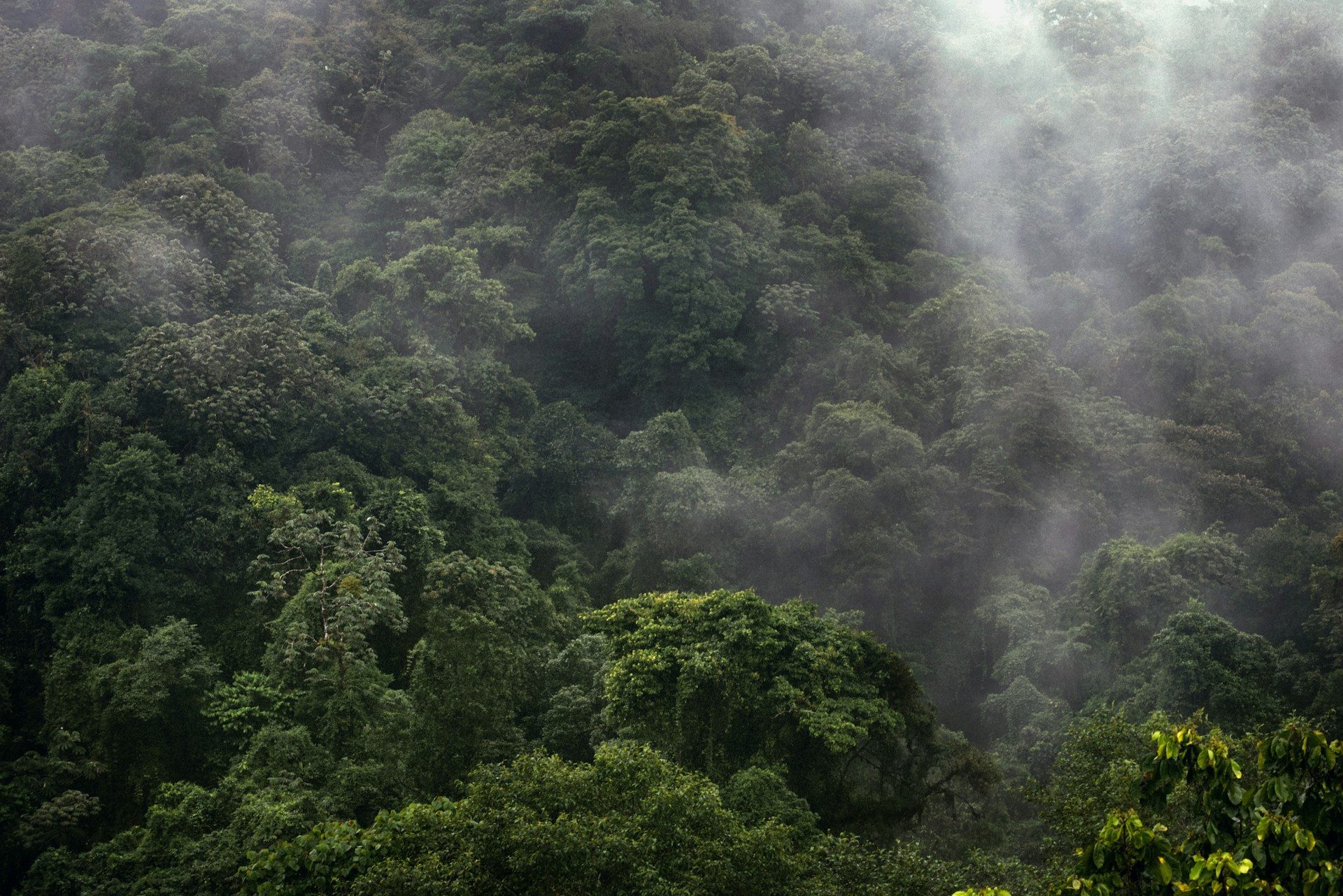
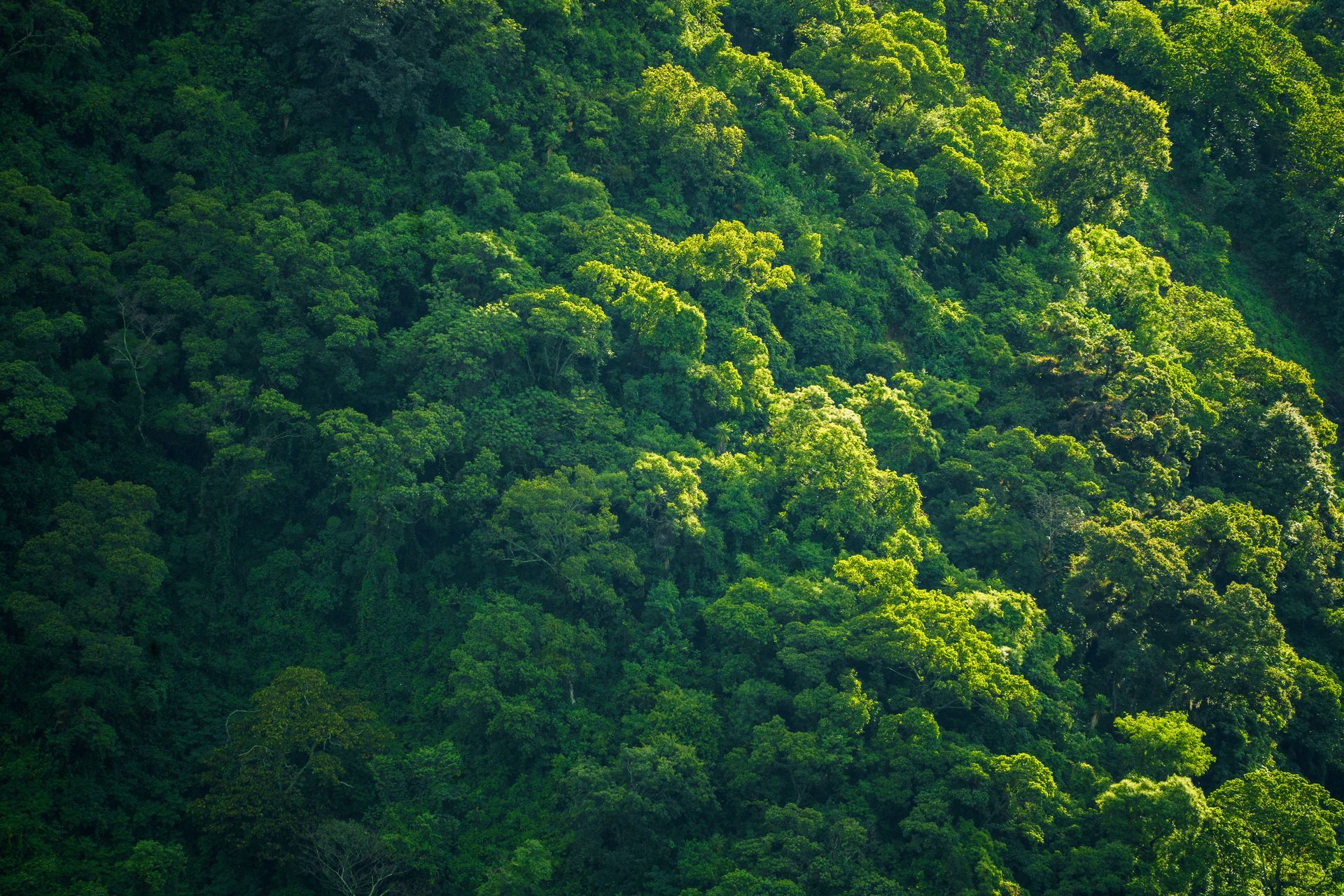
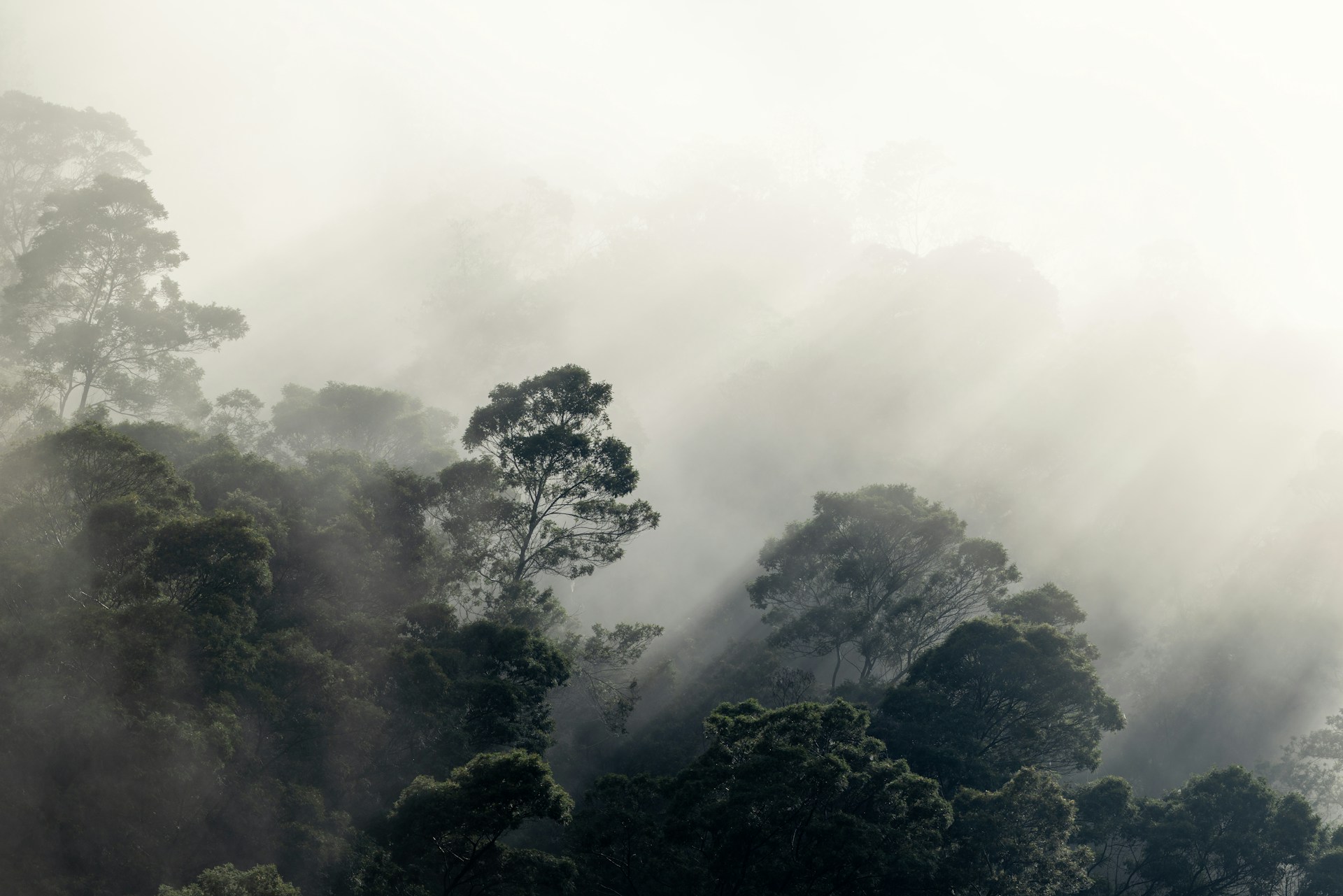
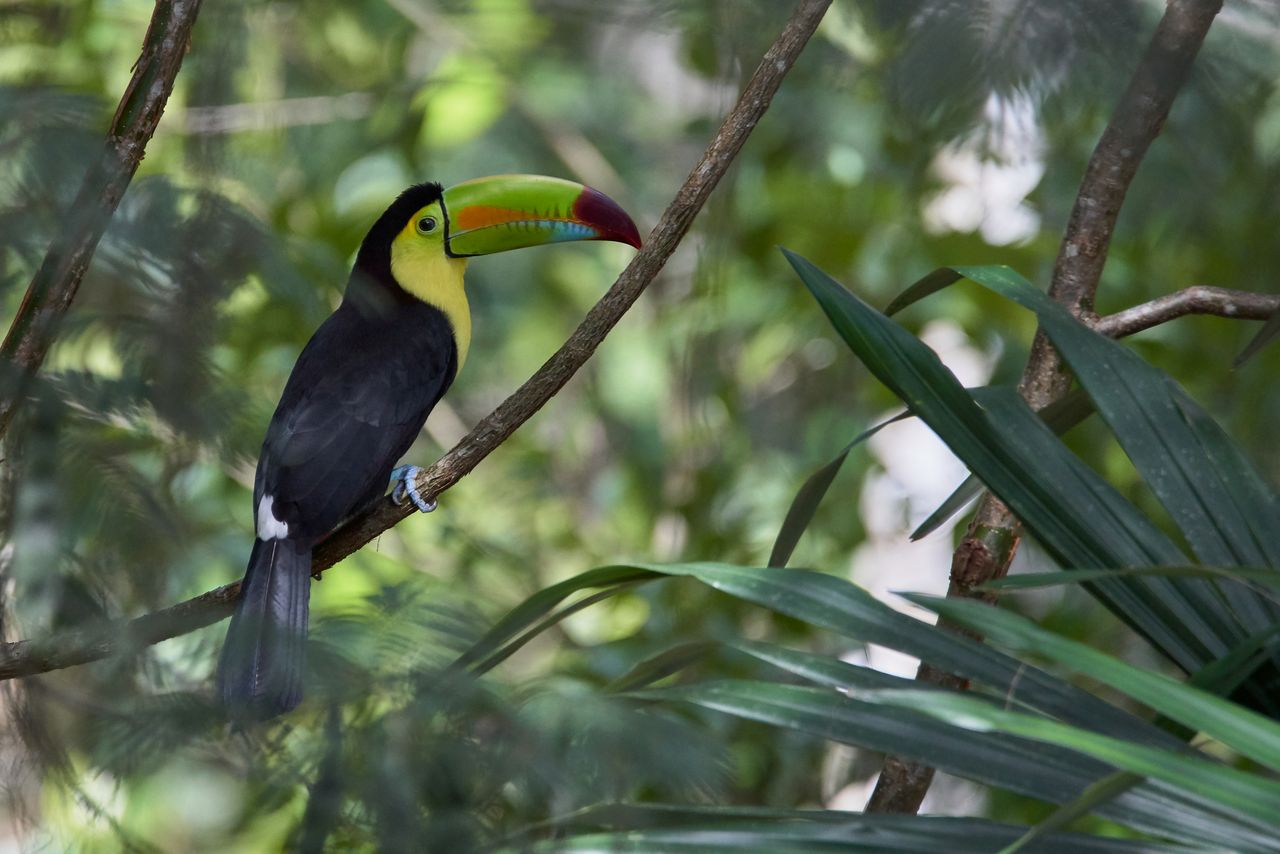
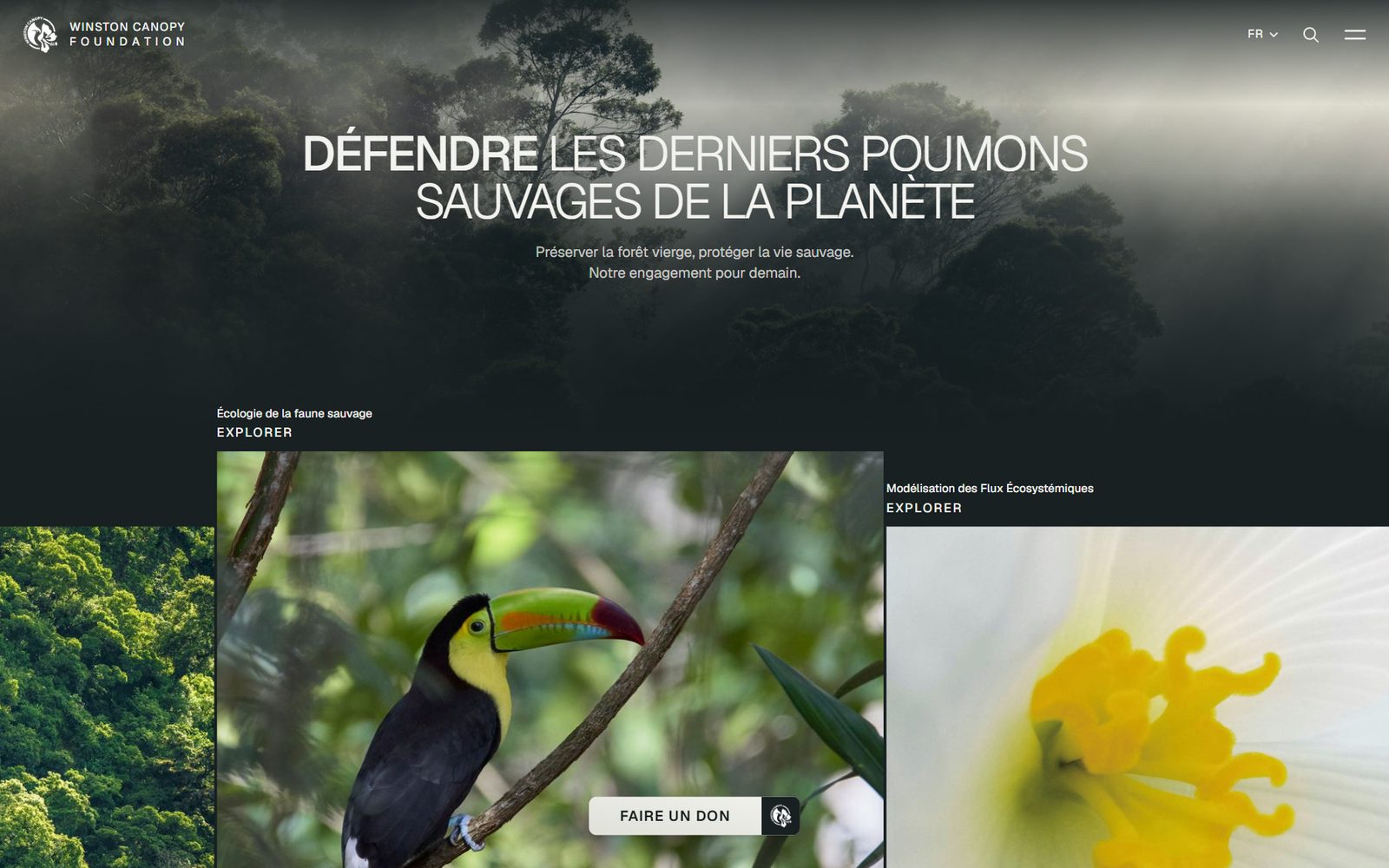
Protecting an ecosystem begins with revealing it in all its density. Rather than presenting abstract metrics on arrival, the platform opens onto the living texture of cloud forests and equatorial understories: dawn aerial footage, bioacoustic surveys, and portraits of endemic arboreal wildlife.
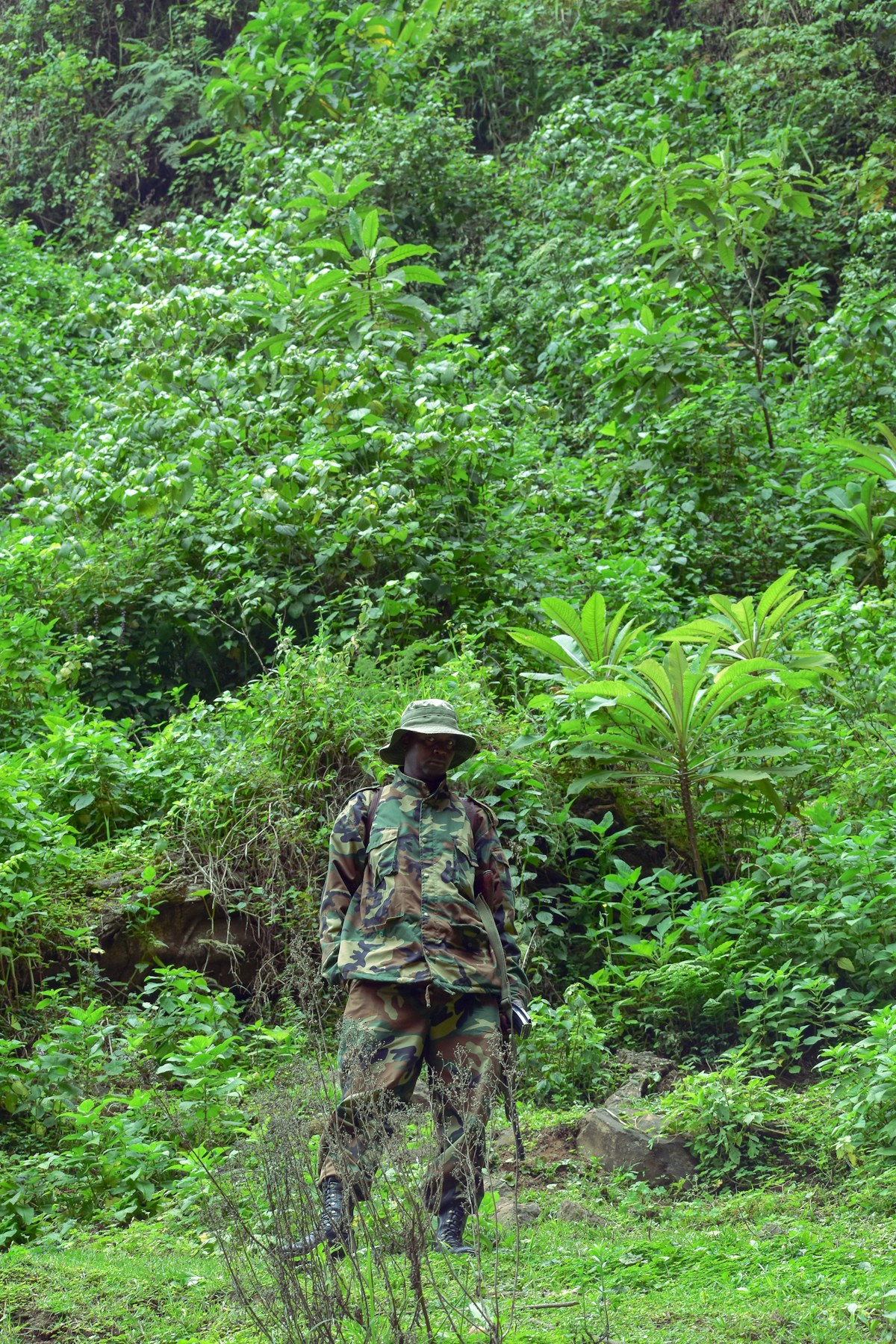
Woven throughout, short documentary vignettes follow the daily work of field biologists at research stations and forest ranger patrols safeguarding sanctuary perimeters.
02 · The four sanctuaries
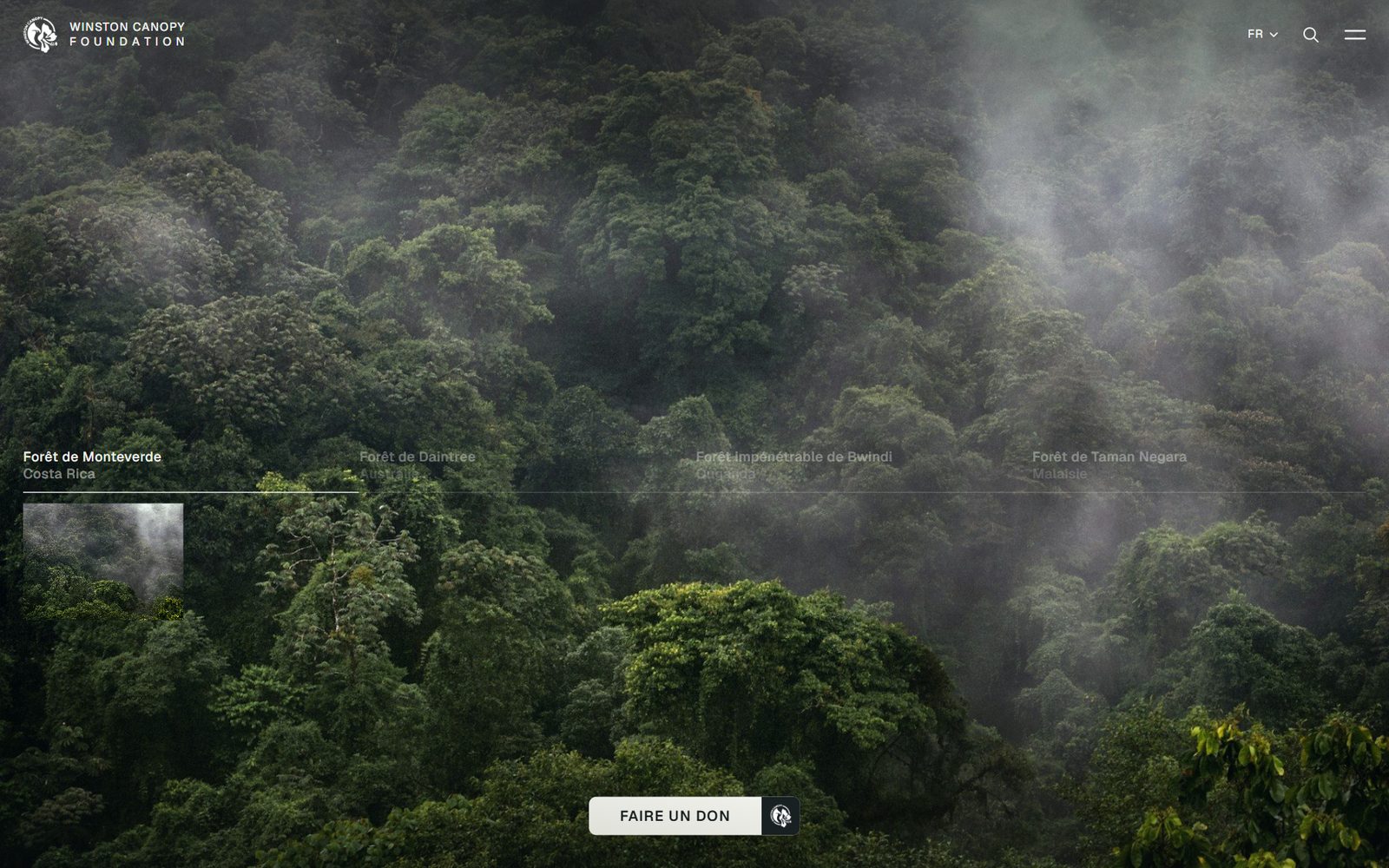
Mapping protected biomes from Monteverde to Taman Negara
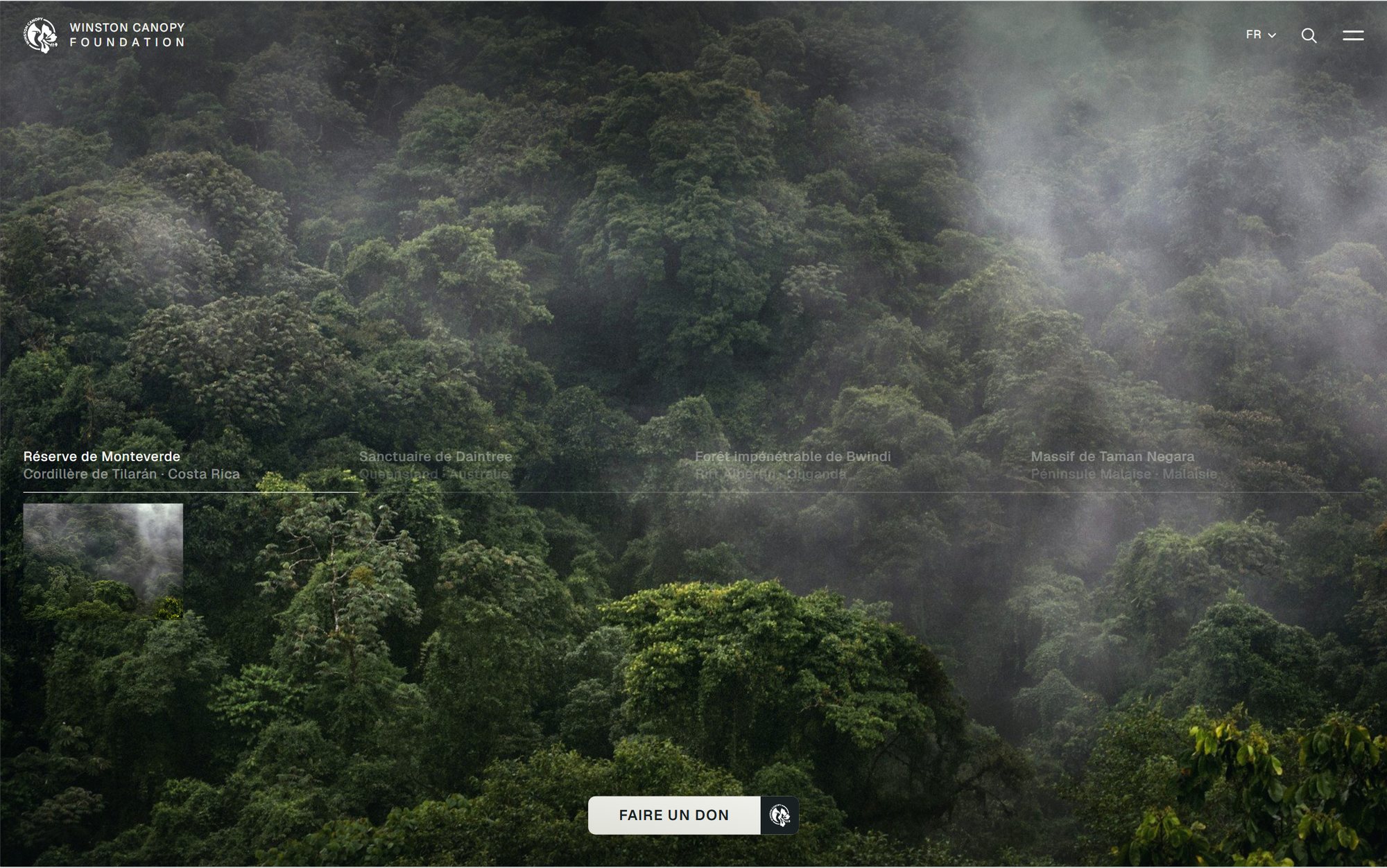
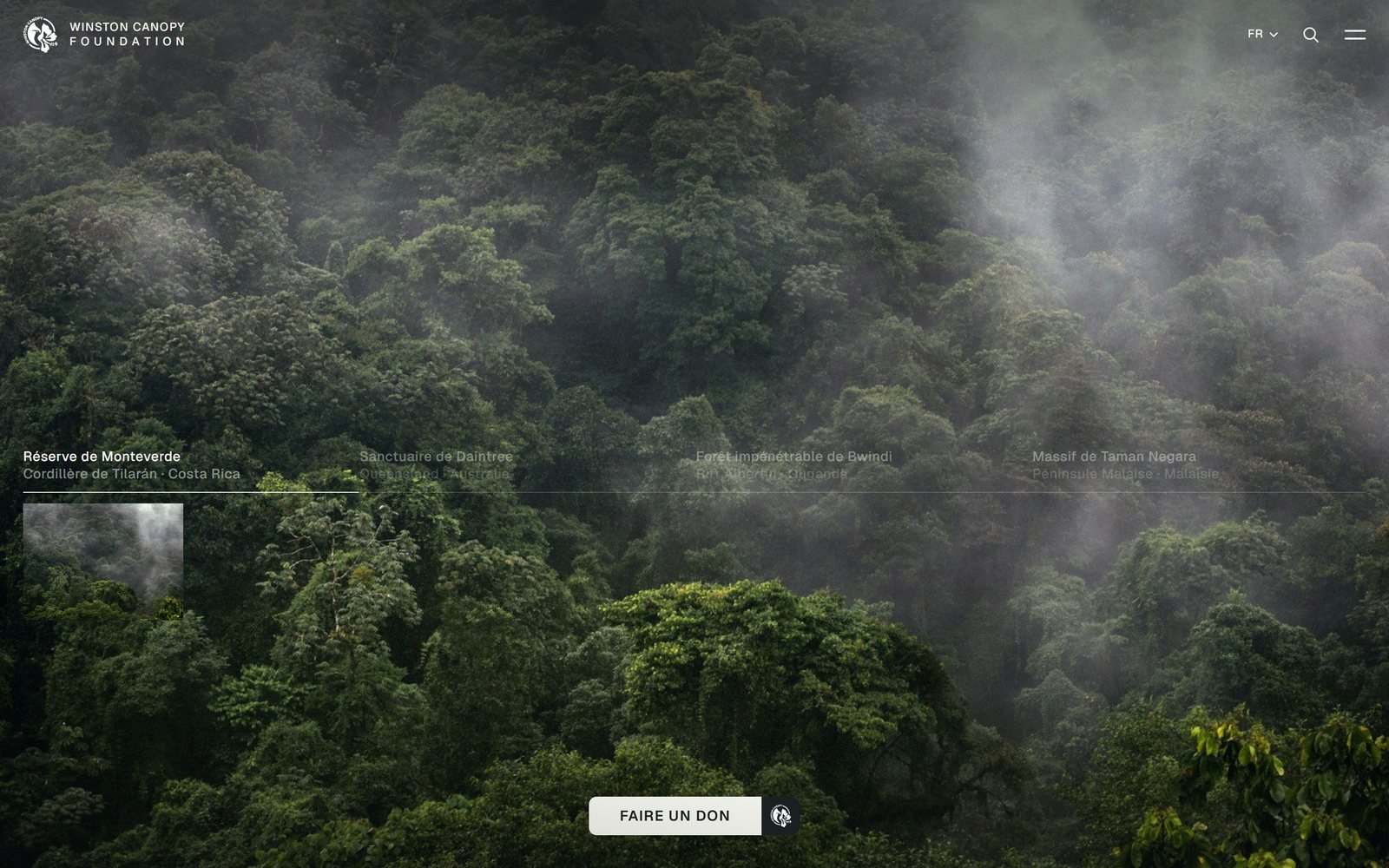
The foundation’s operational reach centers on four vital bastions of global biodiversity: the Monteverde cloud forest in the Tilarán range, the Daintree coastal sanctuary in Queensland, the Bwindi Impenetrable Forest in the Albertine Rift, and the ancient Taman Negara massif across peninsular Malaysia.
A synchronized navigation banner allows visitors to transition smoothly between biotopes while accessing core field indicators: hectares permanently acquired, ecological corridors restored, and umbrella-species monitoring protocols.
03 · Art direction & philanthropy
Understated aesthetics in service of conservation
The color palette borrows its hues from deep forest understories — mineral night green, high-altitude mist and ivory paper — providing a quiet backdrop that lets documentary photography take center stage. Clean grotesque typography structures a seamless bilingual reading experience across every page.
Anchored discreetly along the bottom edge, the donation module accompanies navigation without ever interrupting it, allowing contributions to be directed straight toward patrol equipment or the acquisition of new forest parcels.
04 · The research journal
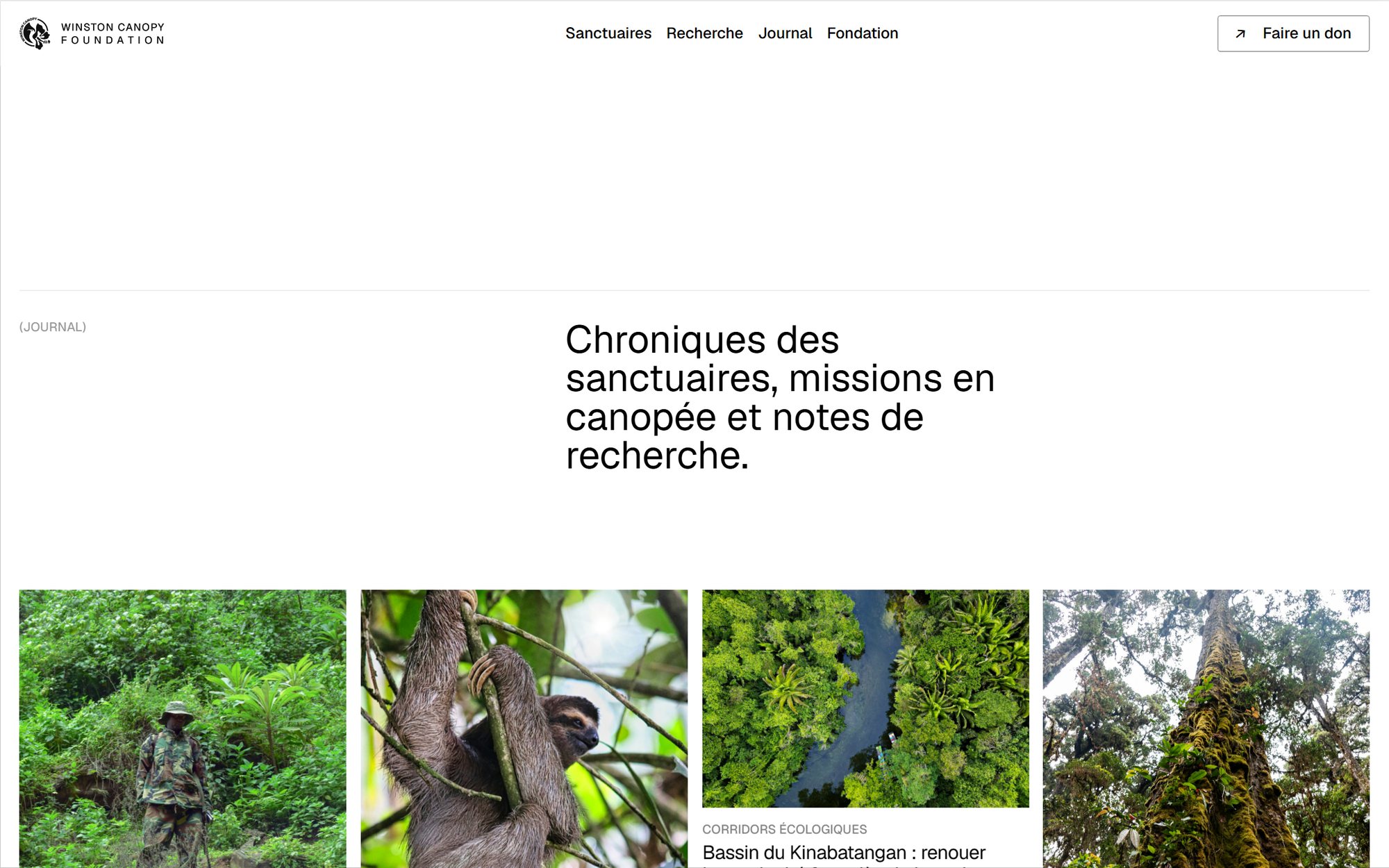
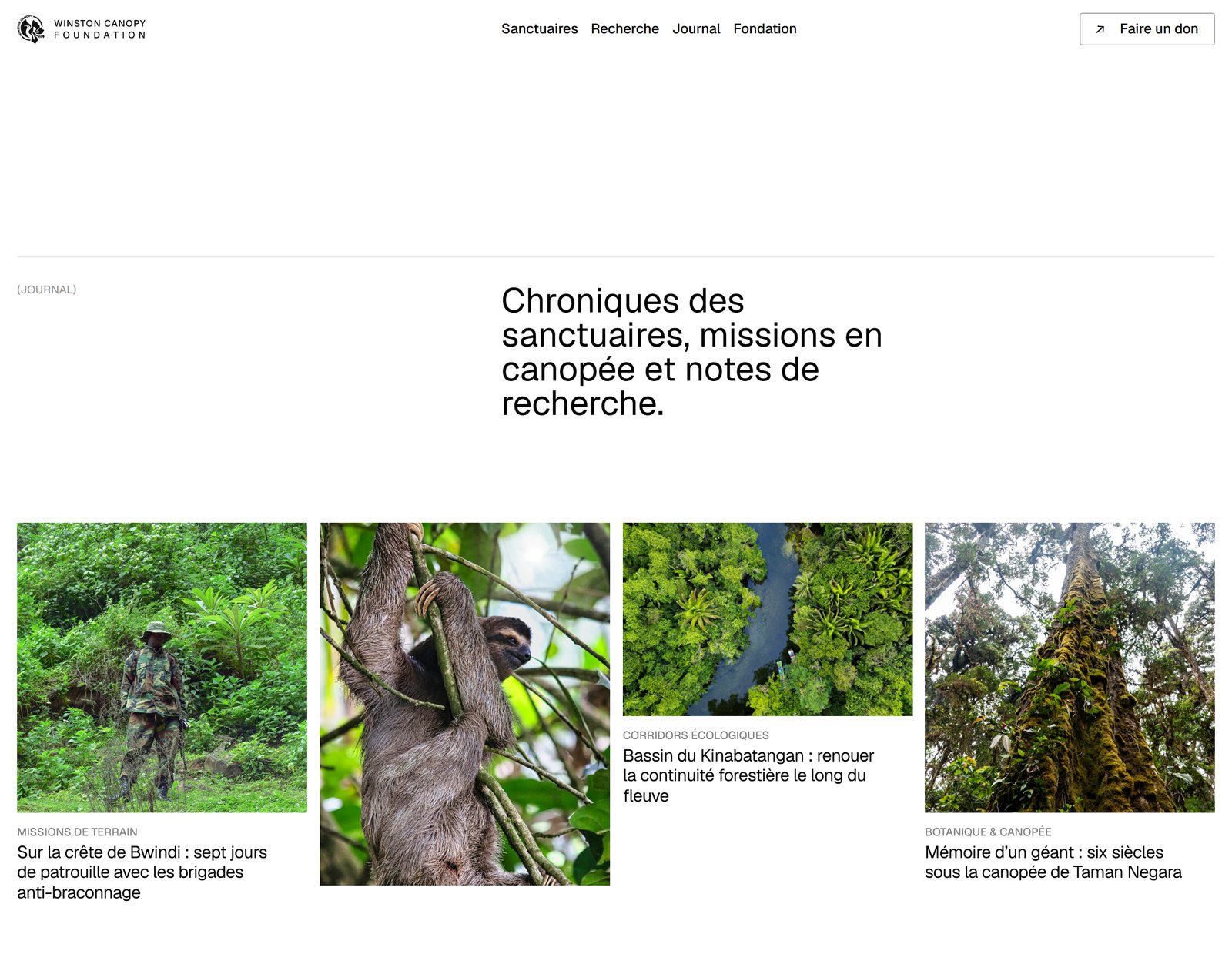
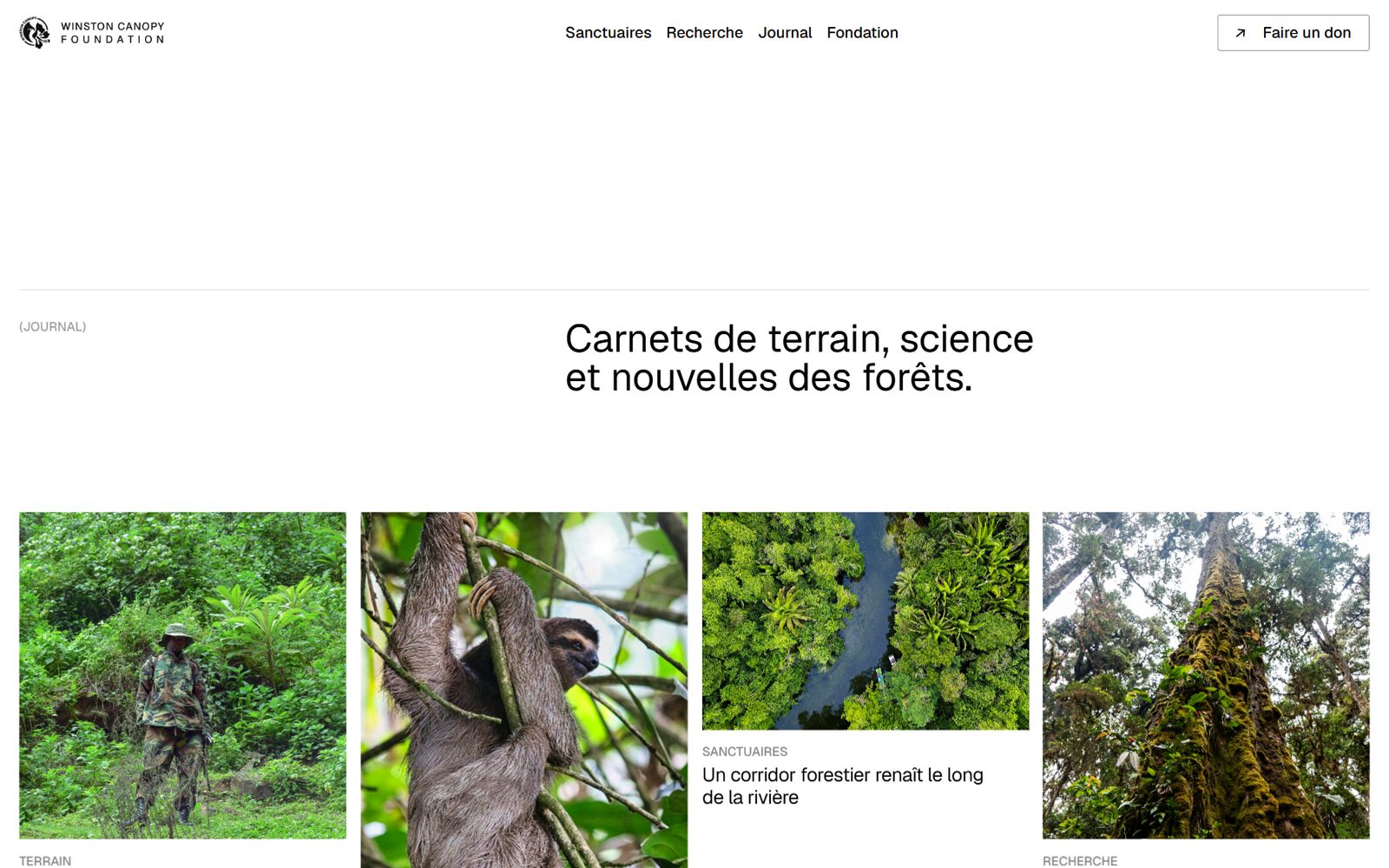
Opening field notebooks from research stations
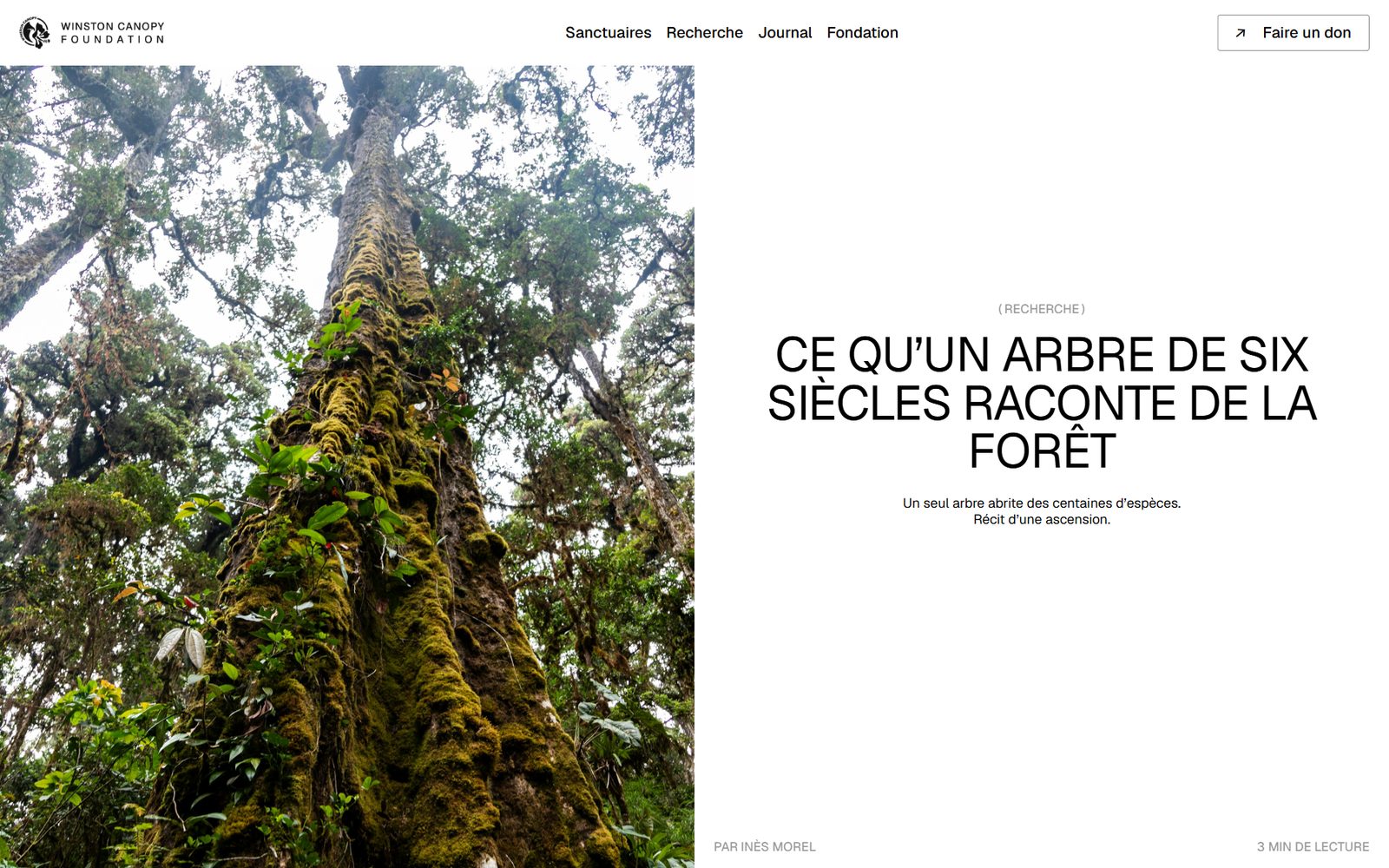
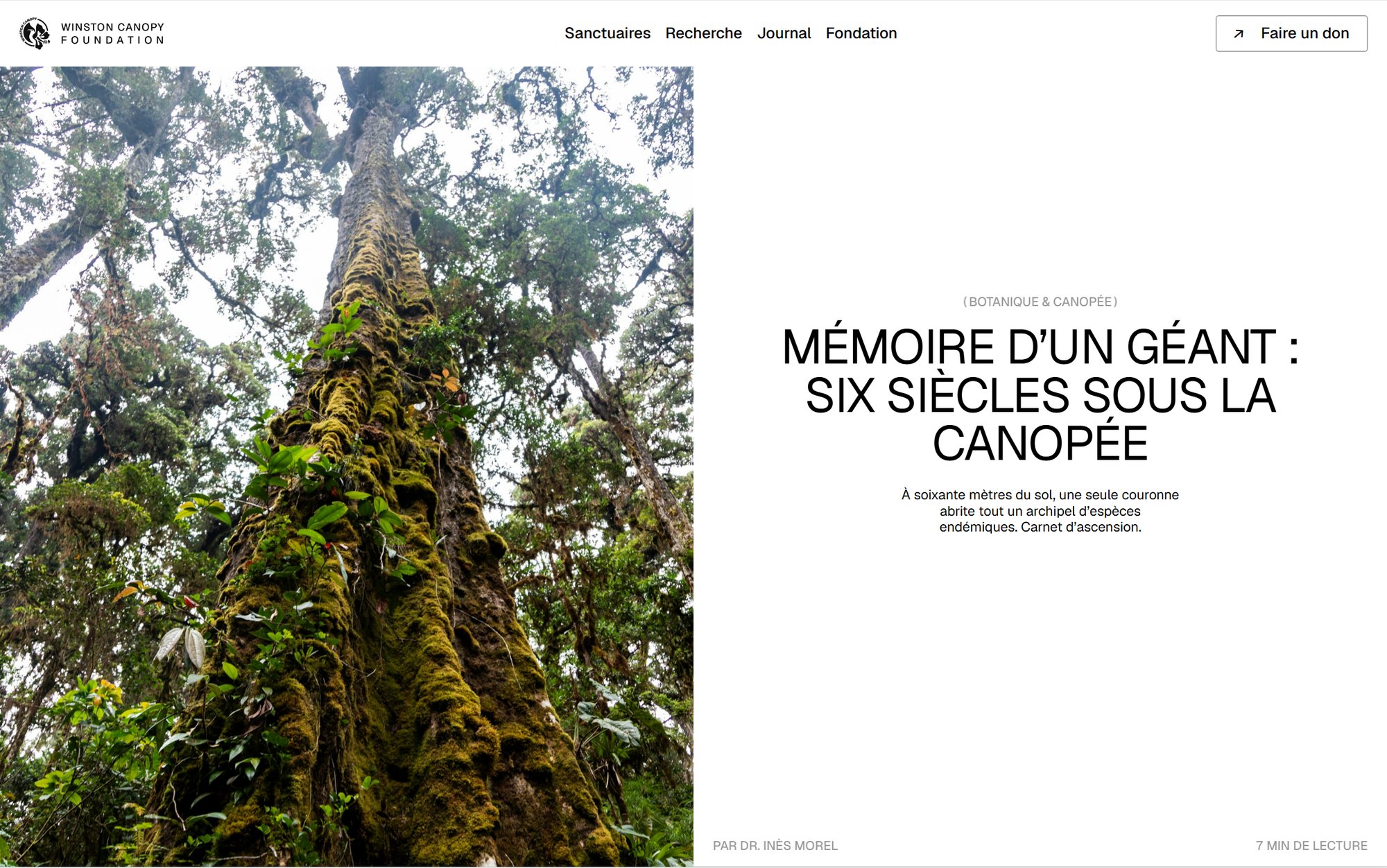
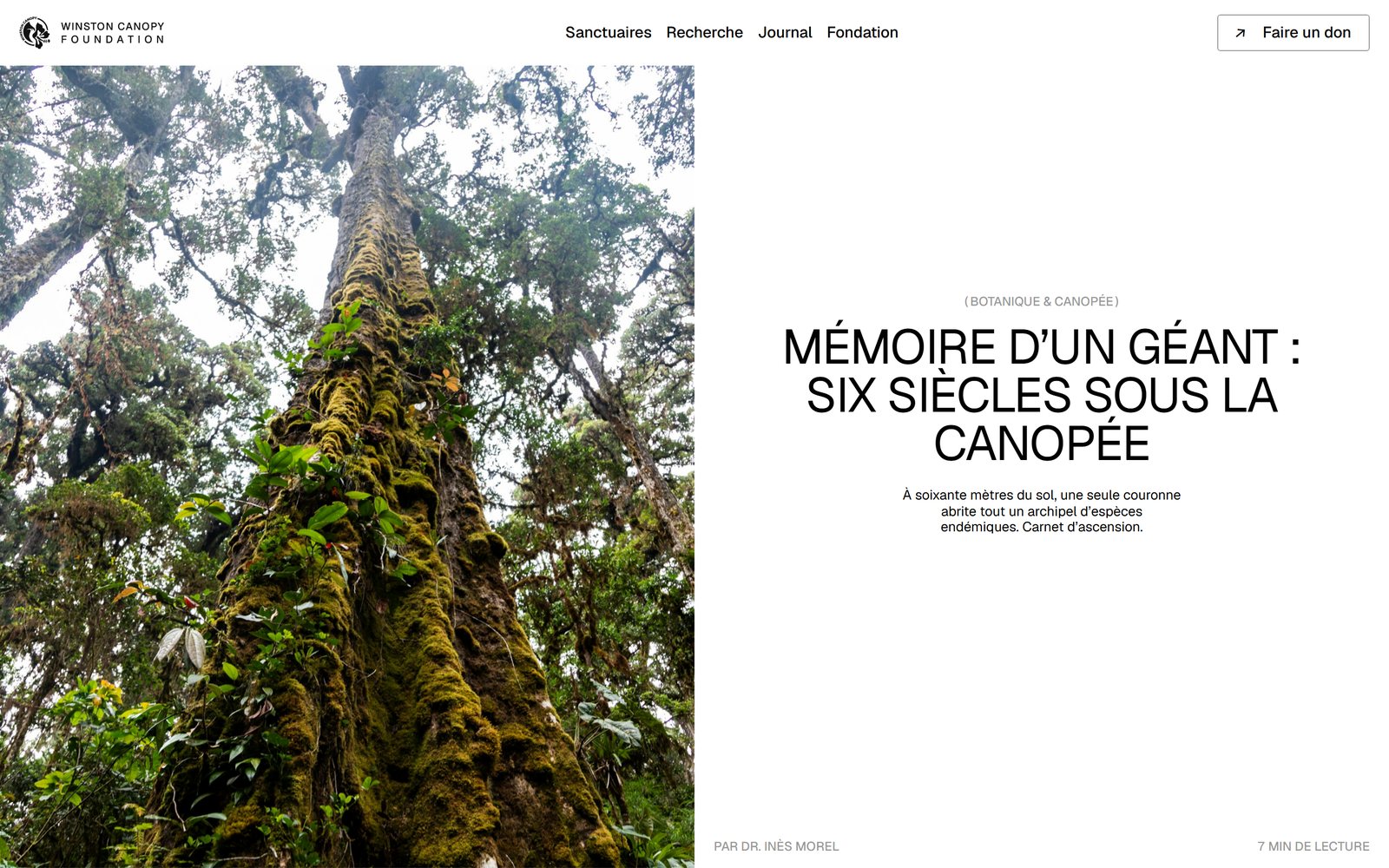
Extending the work of resident scientists, we created an editorial journal that translates peer-reviewed findings into compelling, human field accounts. From ascending a six-hundred-year-old dipterocarp to reforestation initiatives along the Kinabatangan River, or seven days on patrol along Bwindi’s ridgelines, each chronicle documents the inner workings of ancient forests.
These mission narratives are paired with open-access botanical and zoological monographs, consulted by philanthropic donors and academic research partners alike.
05 · Semantic architecture
Structuring ecological data for researchers and AI systems
Beyond the reading experience, the platform redesign relies on comprehensive semantic structuring of scientific and geographic data: reserve coordinates, species taxonomy, academic authorship and conservation program audit trails.
This rigorous metadata ensures premier discoverability across search engines and AI assistants, which now reference the foundation’s field journals and technical reports as primary authoritative sources on primary forest preservation.